Kaká at AC Milan: The Midfielder Who Made Speed Look Simple
Between 2003 and 2009, Kaká turned acceleration into architecture: one long stride, one cleaner angle, one defence left behind.
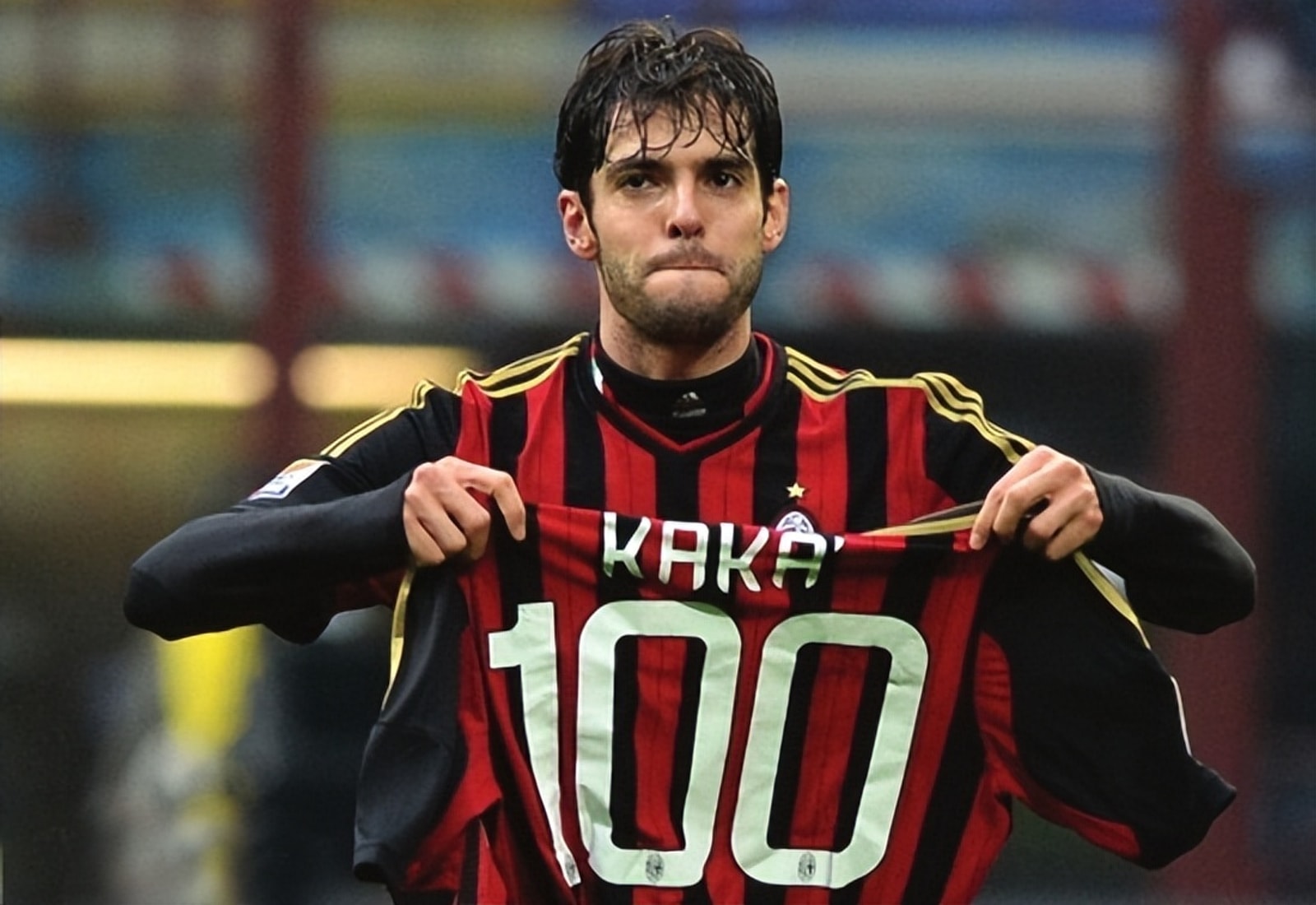
Kaká did not dribble like a showman. He ran like someone solving a problem at full speed. At AC Milan, the Brazilian midfielder made the transition between defence and attack feel shorter than it had any right to be.
His best years at San Siro arrived between two footballing eras. The slower, heavier game of the 1990s was fading, while the Messi and Ronaldo decade had not yet fully begun. In that space, Kaká became the most direct and devastating attacking midfielder in Europe.
From São Paulo to Milanello
Kaká arrived at Milan in 2003 after emerging at São Paulo as a slender, upright playmaker with a mature sense of when to release the ball. Carlo Ancelotti did not ask him to imitate a traditional number ten. He gave him the freedom to attack the space between midfield and defence.
The fit was immediate. Milan won Serie A in his first season, and Kaká added a forward-running dimension to a team already built around Andrea Pirlo's passing, Clarence Seedorf's strength and Rui Costa's invention. He made Milan younger without making them less elegant.
Istanbul and the education of a champion
The 2005 Champions League final became the most painful night of Milan's modern history. Leading 3-0 at half-time against Liverpool, Milan lost control of the match after the interval and eventually lost on penalties.
Kaká had already shown why Milan trusted him in the biggest games. His running carried the team up the pitch, and his ability to receive between Liverpool's midfield and defence created openings that only a handful of players could see. The defeat did not define him, but it sharpened the team around him.
2006-07: the season nobody could catch
The following European campaign became Kaká's masterpiece. He finished as the Champions League's top scorer with ten goals, a remarkable total for a midfielder, and delivered decisive performances at every stage of the knockout rounds.
At Old Trafford, he scored twice in a 3-2 semi-final defeat and produced one of the great individual European displays. He ran through Manchester United's defence with the ball apparently under remote control, changing direction without losing speed or balance. In the return leg at San Siro, Milan won 3-0 and Kaká scored again.
In the Athens final against Liverpool, Milan found the calm performance that had been missing two years earlier. Kaká's pass created Filippo Inzaghi's second goal, and Milan lifted a seventh European Cup. The team's revenge story was collective, but its attacking engine had a name.
What made Kaká different
Kaká's elegance came from efficiency. He kept his head up, kept his upper body quiet and allowed the ball to travel with him rather than fighting it. It looked simple because his first touch and next decision arrived almost simultaneously.
That style made him devastating in transition. When opponents lost possession, Kaká could carry the ball forty or fifty metres before a defensive line had time to organise. He was not only fast; he understood where speed would break the structure of a match.
Ballon d'Or, world champion of 2007
Kaká won the Ballon d'Or and FIFA World Player of the Year in 2007 after his Champions League heroics. He was the last player before the long Messi and Ronaldo period to take the Ballon d'Or, which gives the award an extra historical weight.
He also won the FIFA Club World Cup with Milan in 2007. The tournament gave his season a final international stamp: not simply a brilliant run of form, but a complete year measured in trophies, goals and the memory of defenders trying to recover their positions.
The later Milan years and a difficult goodbye
Injuries began to interrupt his rhythm after the Ballon d'Or season. Milan remained a team in transition, and Kaká's knee problems made the explosive running that defined his game more difficult to sustain.
He joined Real Madrid in 2009 for a then-world-record fee. The move brought another chapter, a La Liga title and more trophies, but it never quite reproduced the freedom and centrality he had at Milan. San Siro was where the player and the team explained each other perfectly.
Kaká's Milan career matters because it joined beauty to directness. He was elegant without being passive, fast without becoming chaotic, and decisive without needing to slow the game down.
Questions about Kaká
When did Kaká join AC Milan?
Kaká joined AC Milan from São Paulo in 2003 and went on to become one of the defining players of the club's mid-2000s era.
How many goals did Kaká score for AC Milan?
Kaká scored 95 goals in 307 appearances for AC Milan across all competitions.
What was Kaká's best Champions League season?
His best season was 2006-07, when he finished as the Champions League's top scorer with ten goals and won the competition with Milan.
Why was Kaká's 2007 Ballon d'Or significant?
He was the last player before the Messi and Ronaldo era to win the Ballon d'Or, making 2007 a unique turning point in modern football.
Is the AC Milan 2007-inspired jersey official merchandise?
No. The VINTAG jersey is an independent, vintage-inspired design and is not affiliated with AC Milan or any official sportswear brand.
Jerseys from this era
Shop all
Continue through the archive
Marco van Basten and the Volley That Reframed the Impossible
A striker, an impossible angle and the split second that turned technique into folklore.
Read the story →
Diego Maradona in 1986: A World Cup in Motion
Mexico 86 was not a tournament Diego Maradona played in. It was a tournament he bent to his will.
Read the story →